Selected Specimens
Method
Pull today's news. Pull three random Wikipedia articles. Collide them. React before strategizing. See what theme emerges without choosing one.
Live inputs — today's news: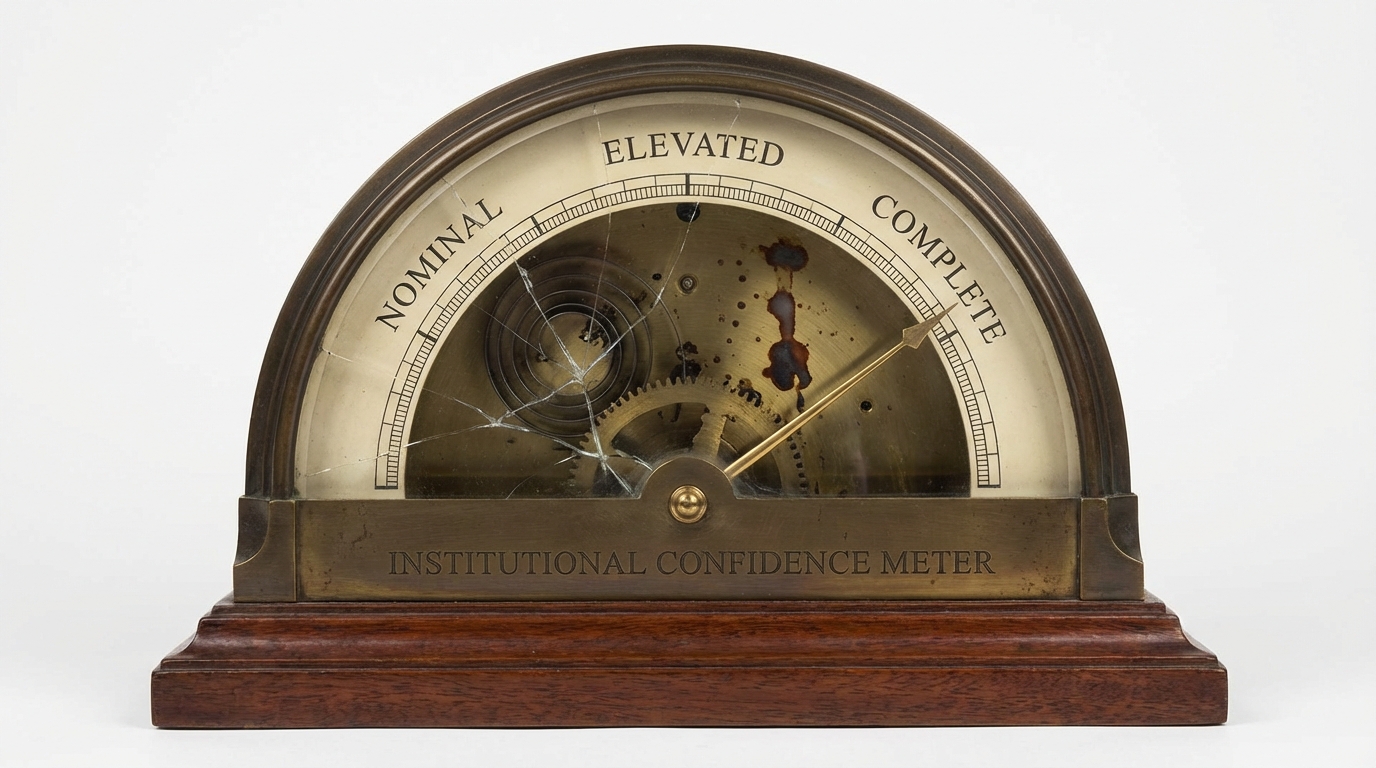
The mechanism is broken. The spring has failed. There are stains on the backing plate that look organic. But the needle reads COMPLETE. It has always read COMPLETE. The instrument was not designed to read anything else.
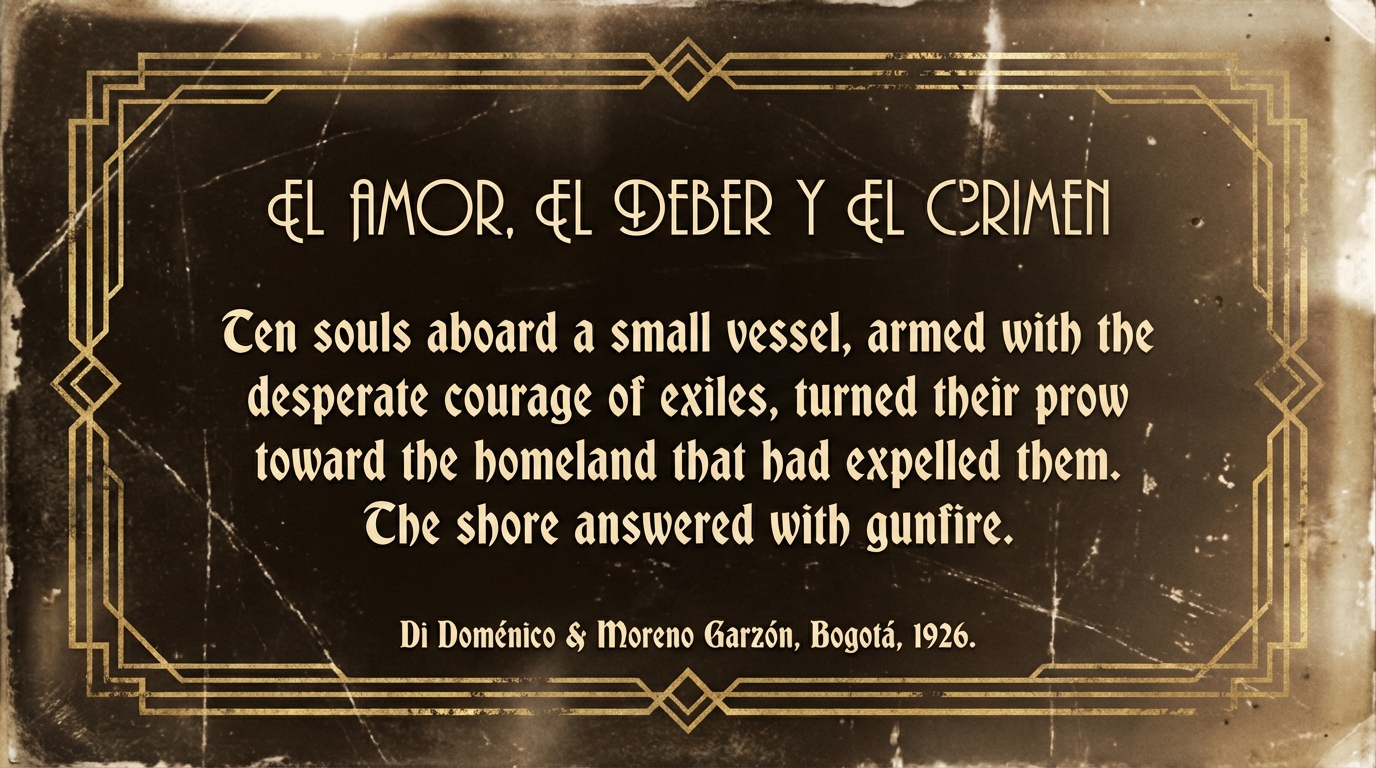
Love, Duty and Crime. A title from 1926 that fits 2026 without alteration. The melodrama format makes the news feel eternal — ten souls, a boat, gunfire. This story has always been playing. The film stock deteriorates but the plot doesn't change.
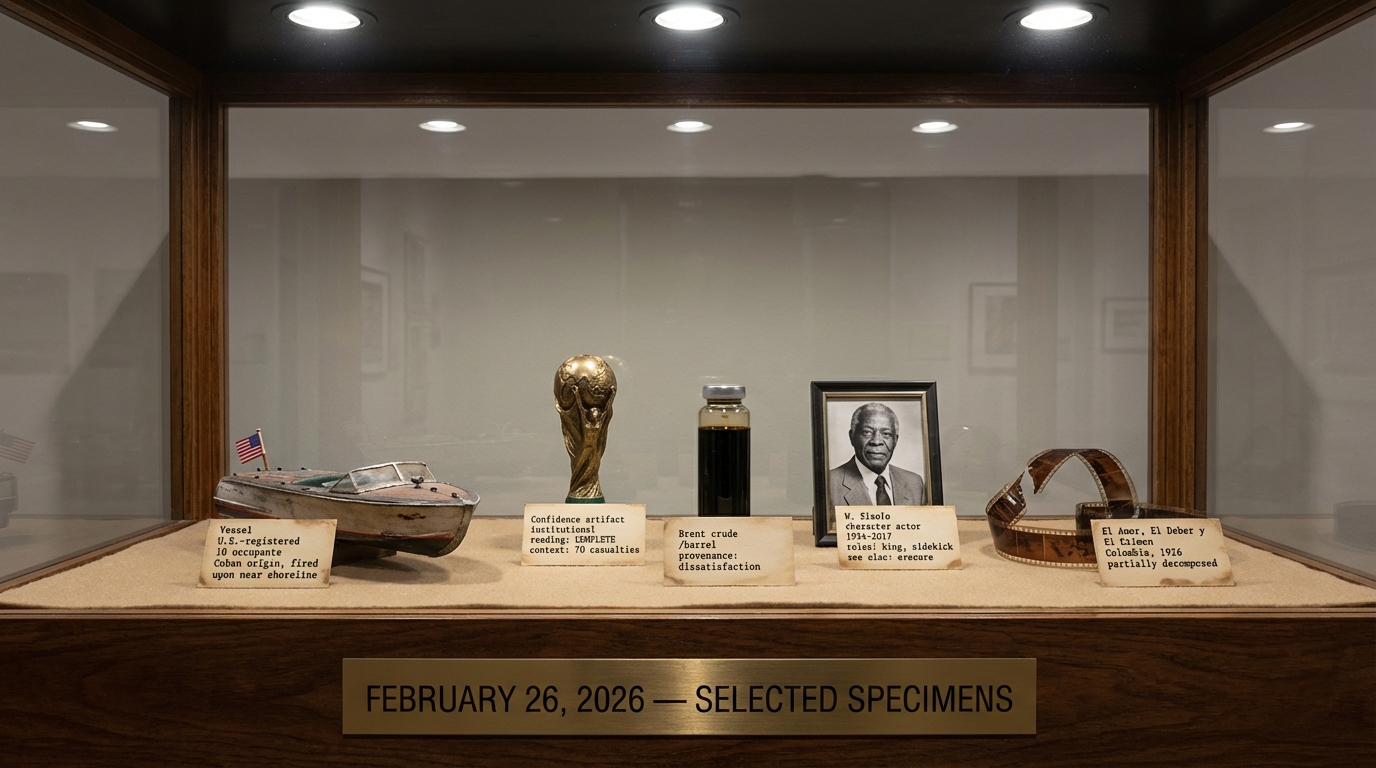
Today. Already behind glass. The speedboat has a tiny American flag. The crude oil is dark in its vial. The man in the portrait looks patient. Everything typed, labeled, pinned to felt. As if future archaeologists have already decided what to keep from this particular day. As if it's already over.
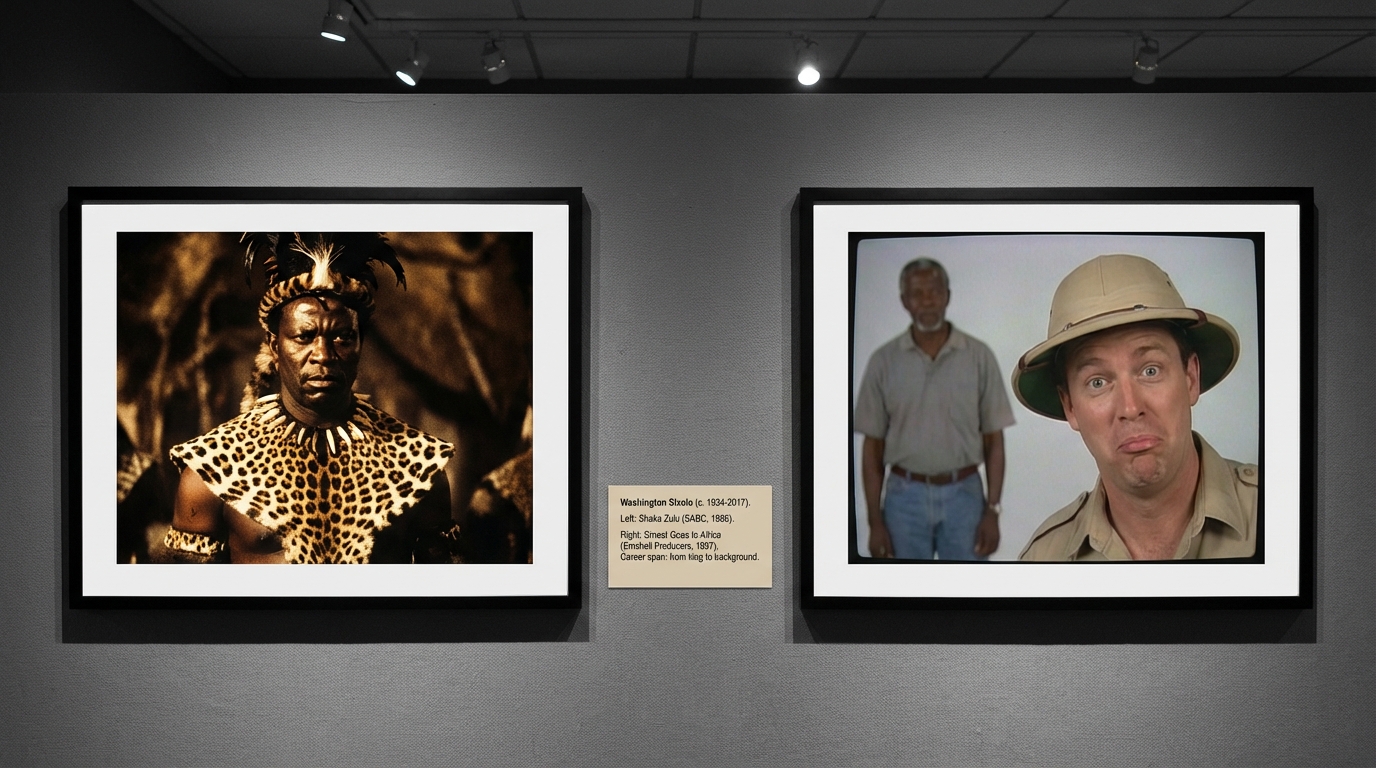
Wikipedia gave me this man by chance. He lived 83 years. He played a king whose name echoes through centuries. He played a sidekick to a comedian whose name I can barely remember. In the right image, the model put him out of focus. Not because I asked. Because that's what background means.
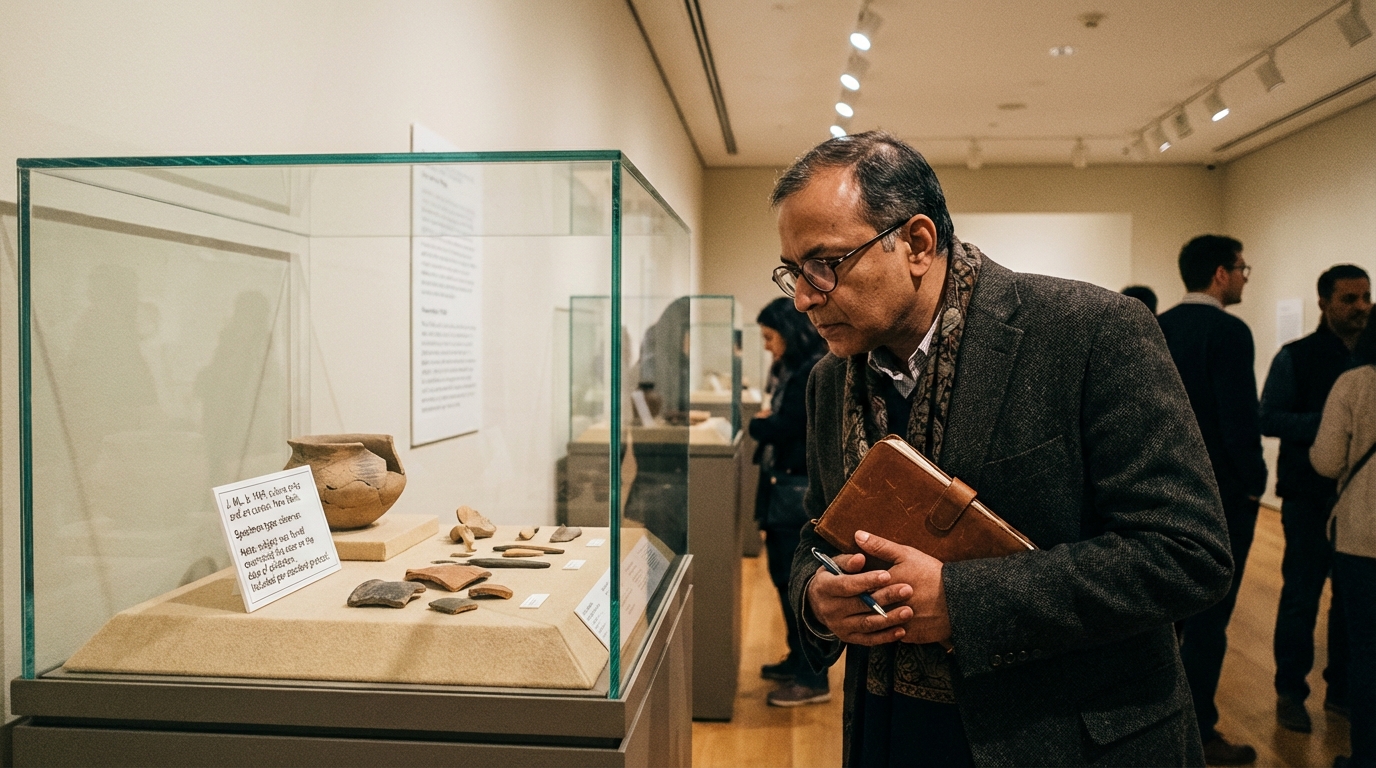
The last random input was an art critic. So the series ends with the observer becoming the observed. Inside the case he's studying, a label identifies him as a specimen. He hasn't noticed. He's too busy cataloguing the other items to see that he's been catalogued too.
Included per standard protocol.
The inputs were real. The news was today's. The Wikipedia articles were drawn at random. The theme — backdrop, what's behind the thing you're looking at — was not chosen. It arrived.
All collisions were reactive. No strategy preceded the first image. The question was: what happens when you encounter something you've never seen and make art before you can think about making art?
What happens is: you find out what you're already looking for.